Site Stabilization 101: Vegetative vs. Structural Methods for North Carolina Sites
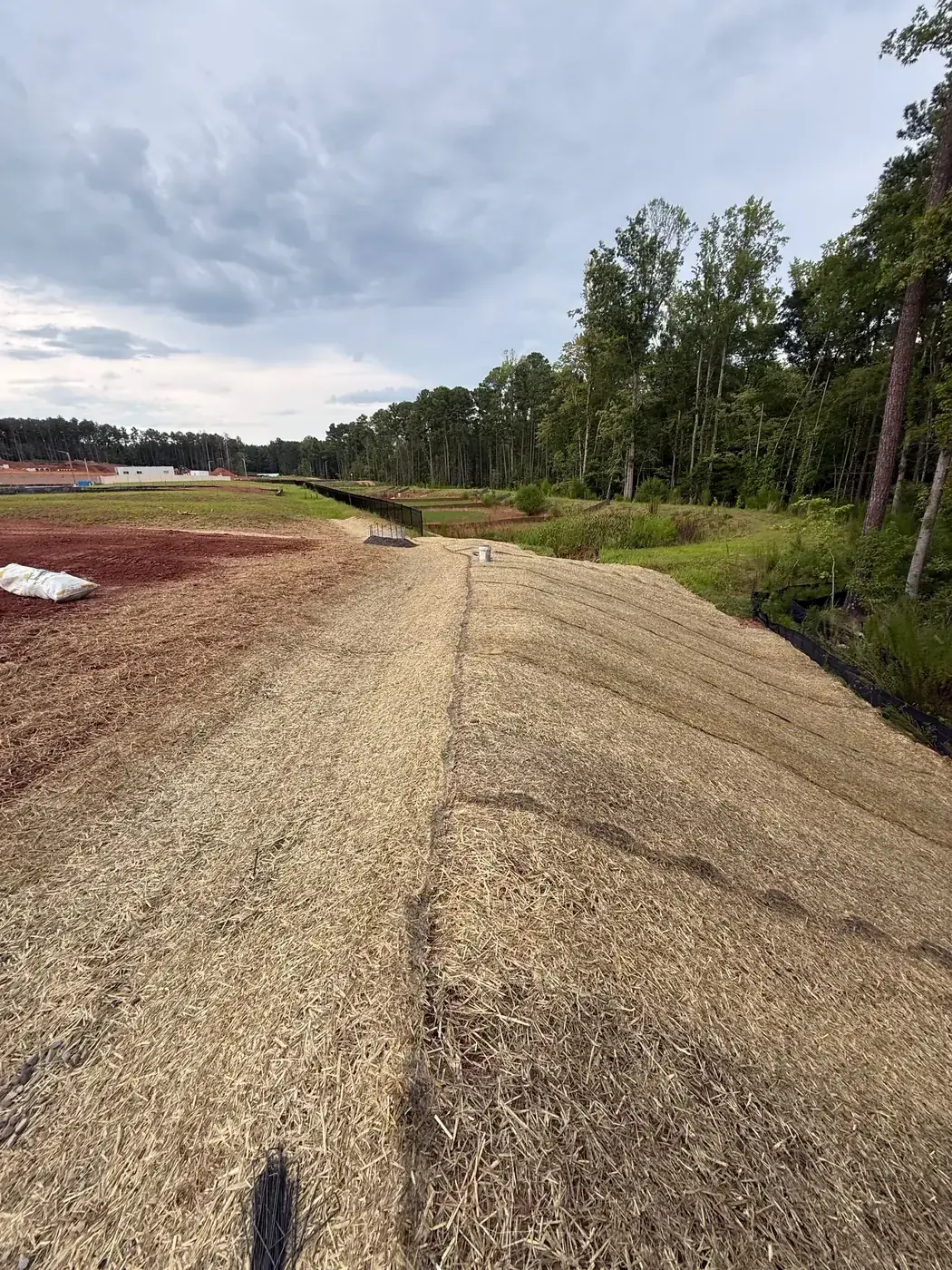
Every disturbed site has to get stable eventually, either on purpose, through planned stabilization measures, or the hard way, through wash-outs, failed inspections and rework. Site stabilization is the set of techniques that gets you there on purpose. The question most contractors actually need answered is which method fits which part of the site.
Two categories, one goal
Stabilization methods fall into two broad categories, and almost every real site needs a mix of both.
Vegetative stabilization uses living cover, seed, sod or plantings, to hold soil with root structure and absorb the impact of rainfall. It is the lower-cost, longer-term solution wherever vegetation can realistically establish and survive.
Structural stabilization uses physical materials, matting, blankets, rip-rap, retaining walls and slope reinforcement, to hold soil where vegetation alone will not survive: steep grades, concentrated flow channels, and areas under active construction traffic.
The goal in both cases is the same: keep soil in place, control sediment, and protect the structural integrity of the site while it moves from active construction to a finished, compliant condition.
When vegetative stabilization is the right call
Vegetative methods work well on:
- Moderate slopes with enough soil depth to support root growth.
- Large open areas where seeding or hydroseeding is more practical than full structural coverage.
- Finished common areas and residential lots where the end goal is a stable, established lawn.
The trade-off is time. Vegetation needs weeks to establish real root strength, which means it usually needs a structural assist, matting, straw or mulch, to survive its first storms.
When structural stabilization is required
Structural methods take over where vegetation cannot do the job alone:
- Steep slopes, where erosion control blankets and matting hold soil and seed in place until roots take over, if they ever fully do.
- Concentrated flow channels, swales and outlets, where rip-rap or coir matting handles water velocity that would wash out bare seed.
- Active construction zones, where silt fence, wattles and check dams filter sediment before permanent vegetation is even an option.
- Retaining situations, where a wall is the only way to hold a grade change safely.
Structural measures tend to be more expensive per square foot, but they are non-negotiable anywhere vegetation alone would fail inspection or wash out with the first real storm.
Matching the method to the site
The real skill in stabilization is not knowing that both categories exist, it is reading a specific site and matching the method to it:
- A moderate slope might get seed and a light matting for protection while it establishes.
- A steep slope or drainage channel might need heavier matting or rip-rap, with seeding layered on top where it can still take hold.
- A pond bank might combine double net matting with permanent seeding, exactly the approach we use on pond conversion projects.
- An active construction entrance needs structural measures first, full stop, since there is no time for vegetation to establish before the next phase of work.
The most common stabilization failure is not picking the wrong method, it is picking a method built for a gentler site than the one actually in front of you.
Stabilization does not end at installation
Stabilization is not a single visit. Inspection and maintenance keep the whole system working:
- Checking matting for lifting or tearing after storm events.
- Reseeding bare spots before they become erosion points.
- Confirming silt fence and wattles are still doing their job as the site changes.
- Verifying vegetated areas are actually established, not just green on the surface.
A site that passed inspection once can still fail a follow-up if maintenance is skipped, which is why ongoing checks are part of the scope, not an optional extra.
The bottom line
Vegetative and structural stabilization are not competing options, they are two tools for two different jobs. Match the method to the slope, the flow, and the stage of construction, protect what you install while it establishes, and keep checking back. Done right, stabilization is the difference between a site that holds through its first hard rain and one that is back on the schedule for rework.
Working on a site across Wake County or Eastern North Carolina that needs a stabilization plan? Give us a call and we will match the right measures to your actual ground conditions.
Have a site that needs attention?
Delcid handles erosion control, stormwater, site stabilization, landscaping and street washing across North Carolina. The fastest way to reach us is a call.